
Smart Homes Kolkata doesn’t rush trends. We let Delhi and Bangalore burn through the hype first, then quietly adopt what actually works. Smart home tech followed the same script for years — a gadget here, a voice assistant there, nothing structural.
That’s changing now.
Walk into a newly renovated flat in Ballygunge or a builder floor in New Town, and there’s a decent chance the lighting responds to the time of day, the curtains open on a schedule, and the AC has already cooled the room before anyone walks in. Not because the owner is a tech enthusiast. Because their interior designer built it in from day one.
The Old Smart Homes Way Doesn’t Work Anymore
For years, “smart home” meant buying a Google Nest after the interiors were done and hoping an electrician could retrofit it without ripping open freshly painted walls. Messy. Expensive. Usually half-functional within six months.
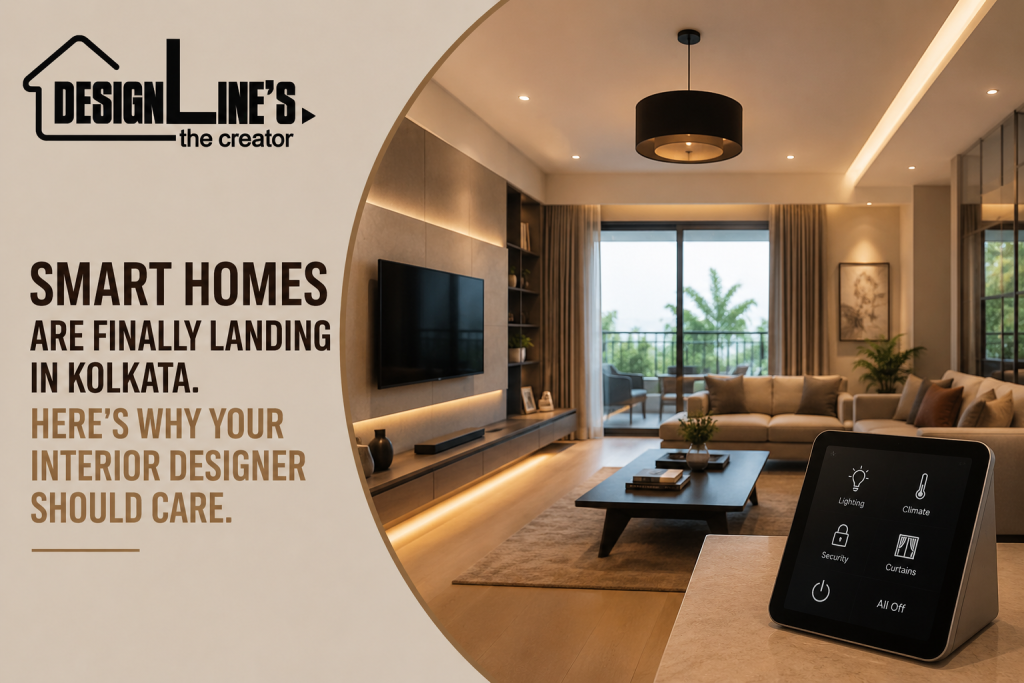
The better approach — the one actual smart home interior design companies in Kolkata are pushing now — treats automation as part of the design brief, not an afterthought bolted on later. Wiring gets planned before the false ceiling goes up. Switch points get decided alongside furniture layout. The hub that controls everything gets a proper spot instead of sitting exposed on a shelf like an afterthought.
I’ve seen the difference up close. A client renovating a 3BHK in Salt Lake wanted “some smart lighting, nothing fancy.” Once the designer actually mapped the electrical plan against the automation plan, they realized the client’s existing switchboard layout would have made half the smart switches unreachable behind a wardrobe. A five-minute conversation before construction saved a very annoying re-wiring job later. That’s the whole pitch for doing this properly from the start.
What “Smart Homes” Actually Means Here (Not the Marketing Version)
Let’s be honest about what most homeowners in Kolkata actually want. It’s rarely a fully voice-controlled sci-fi flat. It’s usually:
- Lights and fans that turn off automatically when nobody’s in the room
- One app (or one voice command) to shut everything down before leaving for office
- Curtains and AC that adjust for Kolkata’s brutal humidity swings between March and July
- Security cameras and door sensors that actually integrate with the rest of the setup instead of running on a separate app nobody opens
None of this requires a smart-glass facade or a home theater with mood lighting for twelve different occasions. Good smart home design is mostly invisible. You notice it when it’s missing, not when it’s there.
And here’s my slightly contrarian take: a lot of “smart home” packages being sold in the city right now are over-engineered for what people actually need. Selling someone a 40-scene lighting automation system for a 2BHK is solving a problem that doesn’t exist. The best firms scope the tech to the life, not the other way around.
Why This Matters More in Kolkata Than People Assume Smart Homes
Two words: power cuts.
Any automation system built for Kolkata has to survive inconsistent power and still function predictably once it’s back. A smart lock that fails open — or worse, fails locked — during a load-shedding evening isn’t a luxury feature, it’s a liability. Local designers who’ve dealt with CESC’s quirks for years build around this instinctively. Someone importing a system designed for Gurgaon apartments usually hasn’t thought about it at all.
Humidity is the other one. Kolkata’s monsoon does things to electronics that Bangalore’s climate simply doesn’t. Panel placement, ventilation around hubs, moisture-resistant wiring — small decisions, but they’re the difference between a system that lasts eight years and one that needs a service call every monsoon.
What to Actually Look For in a Smart Homes Interior Design Company
Skip the sales pitch and ask these instead:
- Do they design the electrical layout alongside the automation plan Smart Homes, or is automation an add-on quoted separately at the end?
- Can the system survive a power outage gracefully — Smart Homes meaning lights default to a safe state, not randomly on or off?
- Is it app-agnostic, or are you locked into one manufacturer’s ecosystem forever?
- Have they actually executed a project in Kolkata’s climate, not just in a showroom demo?
If a firm can’t answer the power-cut question confidently, that’s usually a sign they haven’t built enough real homes here yet.
The Real Value Isn’t the Gadgets Smart Homes
Here’s the thing nobody selling smart homes wants to say out loud: the tech is the easy part. Any decent electrician can wire a smart switch. What’s hard — and what separates a genuinely good interior design company from one just reselling Alexa devices — is the design thinking underneath it. Where does the hub live so it’s accessible but not ugly. How does automation actually change daily behavior instead of just adding another app to open. Whether the aesthetic still feels like a home and not a control room.
A well-designed smart home in Kolkata should feel almost boring to live in. Lights just work. Temperature just feels right when you walk in. Nobody’s fumbling with three different apps trying to turn off a fan at midnight.
That’s not flashy. But it’s the actual point.
Kolkata’s interior design scene is quietly catching up to this, project by project, without the noise you’d see in a bigger metro. Which, honestly, feels about right for this city — no hype, just things that work.
Search on Google

