
Interior Designer vs Interior Decorator When planning to transform your home or commercial space, you’ve probably come across the terms interior designer and interior decorator. While many people use these titles interchangeably, they are actually two different professions with distinct roles, qualifications, and responsibilities.
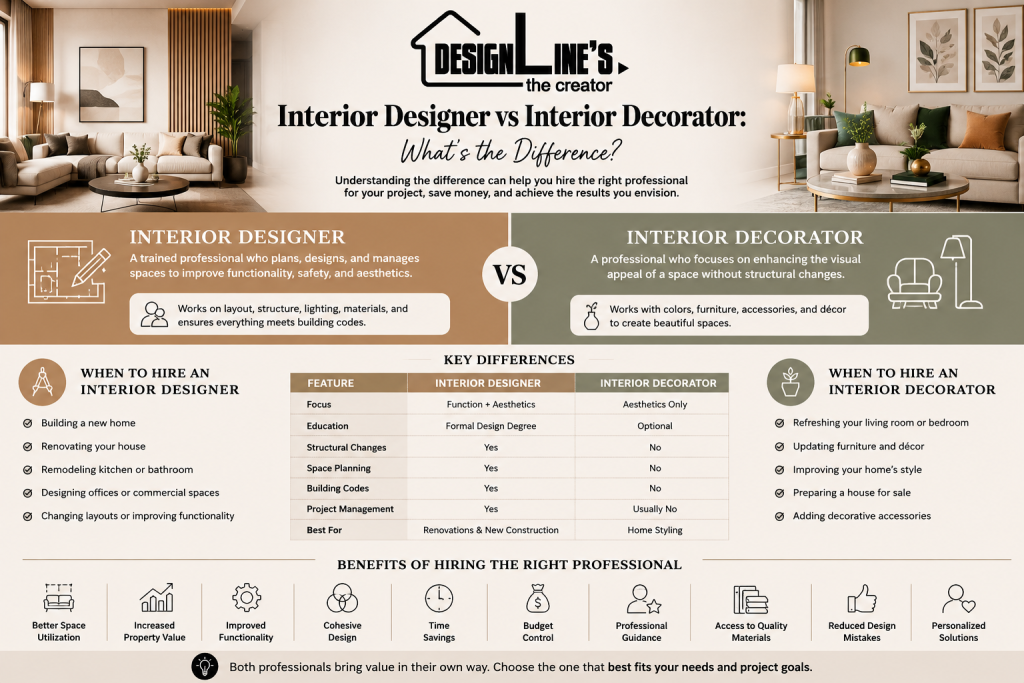
Understanding the difference can help you hire the right professional for your project, save money, and achieve the results you envision.
In this comprehensive guide, we’ll explain everything you need to know about interior designers and interior decorators, including their education, skills, responsibilities, costs, and when you should hire each one.
What Is an Interior Designer vs Interior Decorator?
An Interior Designer vs Interior Decorator is a trained professional who plans, designs, and manages interior spaces to improve their functionality, safety, and aesthetics.
Interior designers don’t just choose furniture and paint colors—they work on the structure and layout of a space to ensure it meets building codes, user needs, and design principles.
They often collaborate with:
- Architects
- Engineers
- Contractors
- Electricians
- Plumbers
- Furniture manufacturers
Their work begins even before construction is complete.
What Does an Interior Designer vs Interior Decorator?
An interior designer is responsible for creating functional, comfortable, and visually appealing interiors.
Their responsibilities include:
- Space planning
- Floor plan development
- Structural layout improvements
- Lighting design
- Ceiling design
- Kitchen and bathroom planning
- Material selection
- Furniture planning
- Electrical layout coordination
- Plumbing coordination
- Color consultation
- 3D visualization
- Budget planning
- Project management
- Site supervision
They ensure every design element works together while meeting safety regulations and client requirements.
Qualifications of an Interior Designer vs Interior Decorator
Most professional interior designers have formal education in interior design.
Common qualifications include:
- Bachelor’s Degree in Interior Design
- Diploma in Interior Design
- Master’s Degree in Interior Architecture
- Professional certifications
- Software training (AutoCAD, SketchUp, Revit, 3ds Max, etc.)
In many countries, licensed interior designers must also pass professional examinations and follow local building regulations.
What Is an Interior Designer vs Interior Decorator?
An interior decorator focuses on improving the appearance of an existing space without making structural changes.
Their primary goal is to enhance aesthetics by selecting decorative elements that reflect the client’s personality and style.
Unlike interior designers, decorators usually work after construction is complete.
What Does an Interior Designer vs Interior Decorator Do?
Interior decorators specialize in beautifying interiors.
Typical responsibilities include:
- Choosing color palettes
- Selecting furniture
- Picking curtains and blinds
- Choosing rugs and carpets
- Wall art selection
- Decorative accessories
- Lighting fixtures
- Cushion and fabric selection
- Styling bookshelves
- Seasonal decoration
- Home staging
They transform ordinary rooms into visually attractive spaces.
Qualifications of an Interior Designer vs Interior Decorator
Unlike interior designers, decorators may not require formal degrees.
Many decorators learn through:
- Decoration courses
- Online certifications
- Practical experience
- Design workshops
- Personal creativity
While education can be helpful, creativity and a strong design sense are often the most valuable assets.
Interior Designer vs Interior Decorator: Key Differences
| Feature | Interior Designer | Interior Decorator |
|---|---|---|
| Focus | Function + Aesthetics | Aesthetics Only |
| Education | Formal Design Degree | Optional |
| Structural Changes | Yes | No |
| Space Planning | Yes | No |
| Building Codes | Yes | No |
| Construction Knowledge | Extensive | Limited |
| Furniture Selection | Yes | Yes |
| Color Consultation | Yes | Yes |
| Project Management | Yes | Usually No |
| Site Supervision | Yes | Rarely |
| Best For | Renovations & New Construction | Home Styling |
Interior Designer vs Interior Decorator: Roles Explained
Interior Designer
The designer looks at the “big picture.”
Questions they answer include:
- Can this wall be removed?
- Is the kitchen layout efficient?
- How should lighting be planned?
- Where should electrical outlets go?
- How can storage be improved?
- Does the design comply with safety standards?
Their goal is to improve how a space functions.
Interior Decorator
The decorator focuses on visual appeal.
Questions they answer include:
- Which sofa matches the room?
- What color should the walls be?
- Which curtains fit the design?
- What artwork suits the space?
- Which accessories complete the room?
Their goal is to make a room beautiful.
Education and Training
Interior Designer
Typically studies:
- Interior Design
- Architecture
- Human behavior
- Building materials
- CAD software
- Lighting design
- Construction methods
- Ergonomics
- Sustainability
Interior Decorator
Usually studies:
- Color theory
- Furniture styles
- Home styling
- Fabric selection
- Decorative trends
- Visual merchandising
When Should You Hire an Interior Designer vs Interior Decorator?
Hire an interior designer if you are:
- Building a new home
- Renovating your house
- Remodeling a kitchen
- Remodeling a bathroom
- Designing an office
- Planning a restaurant
- Creating a retail store
- Redesigning commercial spaces
- Changing room layouts
- Improving functionality
When Should You Hire an Interior Designer vs Interior Decorator?
Choose an interior decorator if you want to:
- Refresh your living room
- Update your bedroom
- Buy new furniture
- Improve your home’s style
- Prepare a house for sale
- Add decorative accessories
- Create a seasonal look
- Change color schemes
Which Professional Costs More?
Generally, interior designers charge more because they provide comprehensive planning, technical expertise, and project management.
Typical pricing factors include:
- Project size
- Location
- Experience
- Complexity
- Timeline
- Material selections
Interior decorators usually charge less because their work focuses on styling rather than structural planning.
Can One Person Be Both?
Yes.
Many professionals today offer both interior design and interior decorating services.
These experts can:
- Design layouts
- Create 3D concepts
- Manage construction
- Select furniture
- Decorate the finished space
Hiring someone who provides both services can create a more cohesive design experience.
Skills Required
Interior Designer vs Interior Decorator Skills
- Technical drawing
- Space planning
- CAD software
- Construction knowledge
- Building regulations
- Project management
- Communication
- Budget management
- Problem-solving
- Creativity
Interior Designer vs Interior Decorator Skills
- Creativity
- Color coordination
- Furniture styling
- Textile knowledge
- Trend awareness
- Visual composition
- Client communication
- Shopping expertise
Common Misconceptions
Myth 1: They’re the Same Profession
False.
Interior designers and decorators have different responsibilities and expertise.
Myth 2: Designers Only Make Spaces Beautiful
False.
Designers improve safety, comfort, functionality, and efficiency in addition to aesthetics.
Myth 3: Decorators Can Redesign House Layouts
False.
Decorators typically don’t modify structural elements or construction plans.
Myth 4: Interior Designers Are Only for Luxury Homes
False.
Interior designers work on projects of all sizes and budgets, helping homeowners maximize functionality and avoid costly mistakes.
Which One Is Right for Your Project?
Ask yourself these questions:
Do you need structural changes?
Choose an Interior Designer.
Do you simply want your home to look better?
Choose an Interior Decorator.
Are you renovating your entire home?
Hire an Interior Designer.
Are you replacing furniture and accessories?
Hire an Interior Decorator.
Benefits of Hiring the Right Professional
Working with the right expert offers several advantages:
- Better space utilization
- Increased property value
- Improved functionality
- Cohesive design
- Time savings
- Budget control
- Professional guidance
- Access to quality materials
- Reduced design mistakes
- Personalized solutions
Frequently Asked Questions (FAQs)
Is an interior designer better than an interior decorator?
Not necessarily. The right choice depends on your project’s scope. Designers are ideal for renovations and new construction, while decorators are best for enhancing the look of existing spaces.
Can an interior decorator renovate my house?
No. Interior decorators generally do not handle structural renovations or construction planning.
Do interior designers choose furniture?
Yes. Interior designers often select furniture, finishes, lighting, and décor as part of a complete design plan.
Can I hire both an interior designer and an interior decorator?
Absolutely. Many large projects benefit from both professionals, with the designer handling the technical aspects and the decorator refining the final look.
Which profession requires more education?
Interior designers typically complete formal education and may need certifications or licenses, depending on local regulations. Interior decorators generally do not have mandatory educational requirements.
Final Thoughts
Although the terms interior designer and interior decorator are often used interchangeably, they serve different purposes. An interior designer focuses on creating functional, safe, and efficient spaces by addressing layout, construction, and technical planning, while an interior decorator enhances the visual appeal of a finished space through furniture, colors, textiles, and accessories.
Choosing the right professional depends on your goals. If you’re building, remodeling, or making structural changes, an interior designer is the right choice. If your space simply needs a fresh look with updated furnishings and décor, an interior decorator can help bring your vision to life. Understanding these distinctions ensures you invest in the expertise that best fits your project, budget, and desired outcome.
Search On Google

